EASY

Module 10: Reasoning, Problem Solving and Ideation

Uncategorized
Wishlist Share
Share Course
Page Link
Share On Social Media

About Course

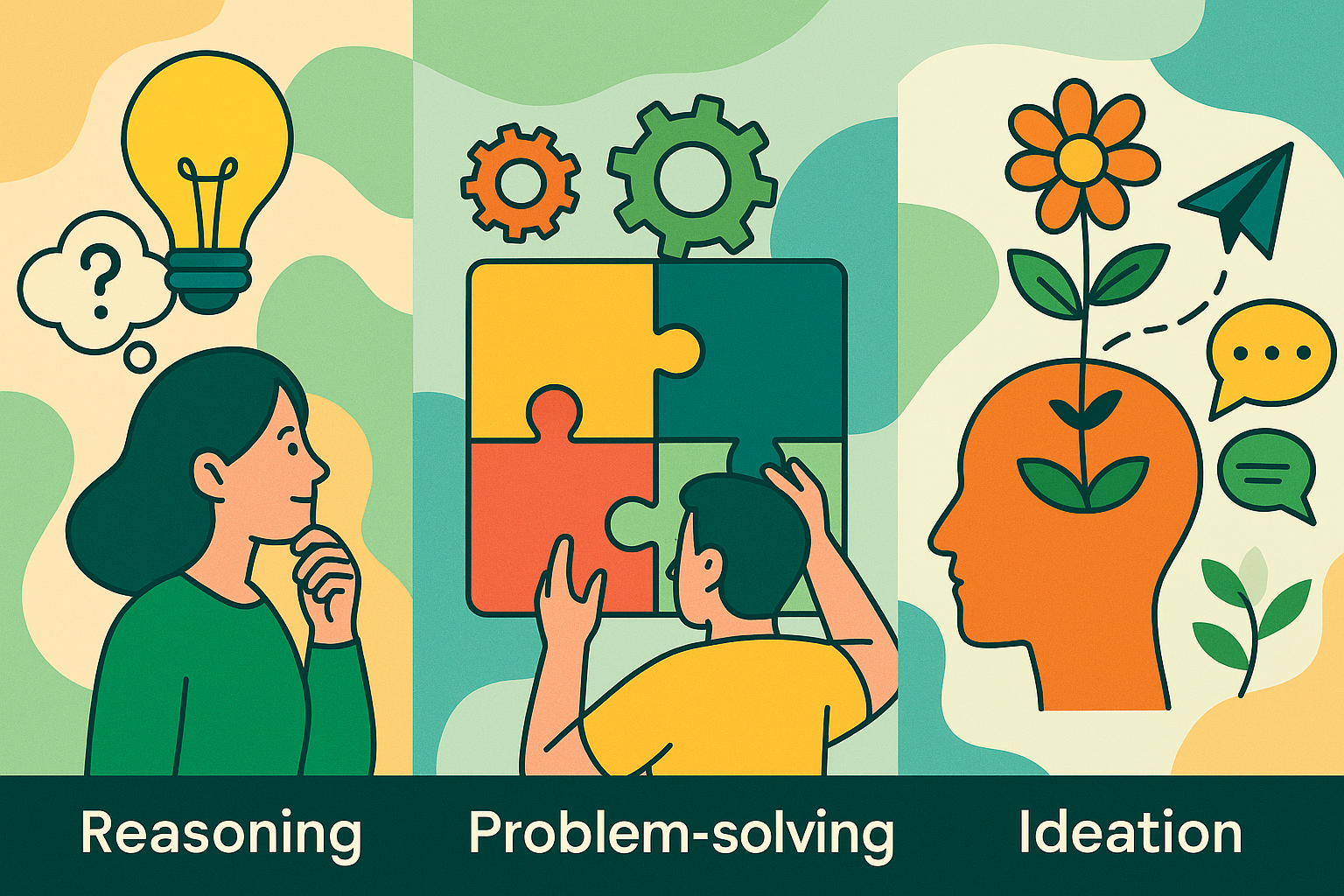
Hello! Welcome to the 10th and final module of your e-learning experience within this project. As its title suggests, our goal is to help you explore the cognitive mechanisms behind having an easier time engaging the initial stages of developing solutions to any challenges your BIG dreams bring into your life.

Part 1 – Reasoning

What is important? Why is this important? How are thoughts and feelings shaping our reasoning experience? What is the role of the process of priming and how does it influence the way we identify priorities?

Part 2 – Problem Solving

How can we tell if the problem is really the problem? What are the 4 main types of problems and what strategies can we use towards successfully overcoming them? What key resources do we have available within and around us, at any given time, and how can we identify their purpose for an effective solution-oriented work process? 

Part 3 – Ideation

How can we see the same situation from multiple, complementary perspectives and how is peer communication structured in order to encourage creativity and variety? What are the right questions and who can inform and validate the selection process towards discovering ideas worth testing in the real world?

Let’s start rolling! 🚲

Show More

What Will You Learn?

  • explore how thoughts and feelings shape our reasoning experience and influence the way we identify priorities in life and work
  • what is reasoning and why is it important? What could be the role of metacognition (the mental process of thinking about our own thinking)
  • you’ll be able to identify challenges proactively and know that all the resources for overcoming them are readily available and waiting for you to see them
  • We’ll focus on structuring conversations so that every voice contributes to creativity and variety.
  • learn how peer communication can unlock new angles and spark innovative concepts.
  • we’ll explore how to validate and select the best ideas

Course Content

Part 1: Reasoning
How do we actually reason through what matters most to us? In this part, we will explore how thoughts and feelings shape our reasoning experience and influence the way we identify priorities in life and work. Also… what is reasoning and why is it important? What could be the role of metacognition (the mental process of thinking about our own thinking) for effective reasoning? You will discover why emotions are not obstacles to logic but essential partners in decision-making. We’ll look at how priming (the subtle cues and experiences we encounter every day) can prepare our brain to focus on certain options over others, often without us realizing it. Why is this important? Because being aware of these influences helps us make clearer choices aligned with our true goals. Together, we will practice reflecting on what is important, why it is important, and how to create mental environments that support clarity and purpose. 🪴

Part 2: Problem Solving
What if the problem you see isn’t the real problem? This section is about learning to define challenges correctly before jumping into solutions. You’ll explore the four main types of problems and discover matching strategies to solve each one effectively. We’ll also encourage you to develop a mindset focused on identifying the resources you already have: both within yourself (skills, resilience, creativity, etc) and around you (networks, technology, environment). This way, you will pay more attention to the present moment and feel increasingly connected to yourself and the world outside. By the end, you’ll be able to identify challenges proactively and know that all the resources for overcoming them are readily available and waiting for you to see them. You will become a solution-oriented individual, with patience and enough curiosity to figure things out every single time. Does it sound exciting? I can’t hear you!!! 🌞

Part 3: Ideation
How do you turn an idea into something worth testing in the real world? This section is about thinking broadly and creatively, seeing challenges from multiple perspectives, and asking the right questions. Maybe also daring to say “yes” more often when considering fresh solutions. You’ll learn how peer communication can unlock new angles and spark innovative concepts. We’ll focus on structuring conversations so that every voice contributes to creativity and variety. Finally, we’ll explore how to validate and select the best ideas (ones worth investing your energy in) using real-world feedback and collaboration. 🪧 Because as you’ll find out yourself throughout this section, there really is no learning without enough space for “stupid” questions, exchange of ideas, genuine feedback and the pursuit of vulnerable truths that may be contradictory to our original ideas. You will learn a growth mindset.

Student Ratings & Reviews

No Review Yet
No Review Yet
Gérer le consentement aux cookies

Afin d'offrir la meilleure expérience possible, nous utilisons des technologies telles que les cookies pour stocker et/ou accéder aux informations des appareils. Le fait de ne pas consentir ou de retirer son consentement peut avoir un effet négatif sur certaines caractéristiques et fonctions.

View more
Cookies settings
Accepter
Refuser
Confidentialité et cookies
Privacy & Cookies policy
Cookie name Active
Save settings
Cookies settings