EASY

Module 5 – Creativity & Initiative

Uncategorized
Wishlist Share
Share Course
Page Link
Share On Social Media

About Course

Creativity is the ability to imagine fresh ideas and see new connections, while initiative is the courage to act on them. Together, they form a skillset that helps young people move from thinking to doing. In today’s Europe, where the labour market is shaped by constant change, employers seek people who can contribute original solutions and take action without waiting to be told.


This module introduces young people—and the youth workers supporting them—to practical ways of building creativity and initiative. It is designed for all learners, from those with fewer opportunities to those already achieving well in formal education, but who want to strengthen skills that are often underdeveloped in schools.


The module blends short theory with interactive tasks, quizzes, and reflection. Youth workers will find adaptable activities that can be used in group workshops, training sessions, or self-study. By the end, learners will know what creativity and initiative mean, why they matter, and how to use them in studies, volunteering, and jobs.


Module Parts (3 bullets)

  • FOUNDATIONS OF CREATIVITY — Understanding what creativity is and how it shapes problem-solving.
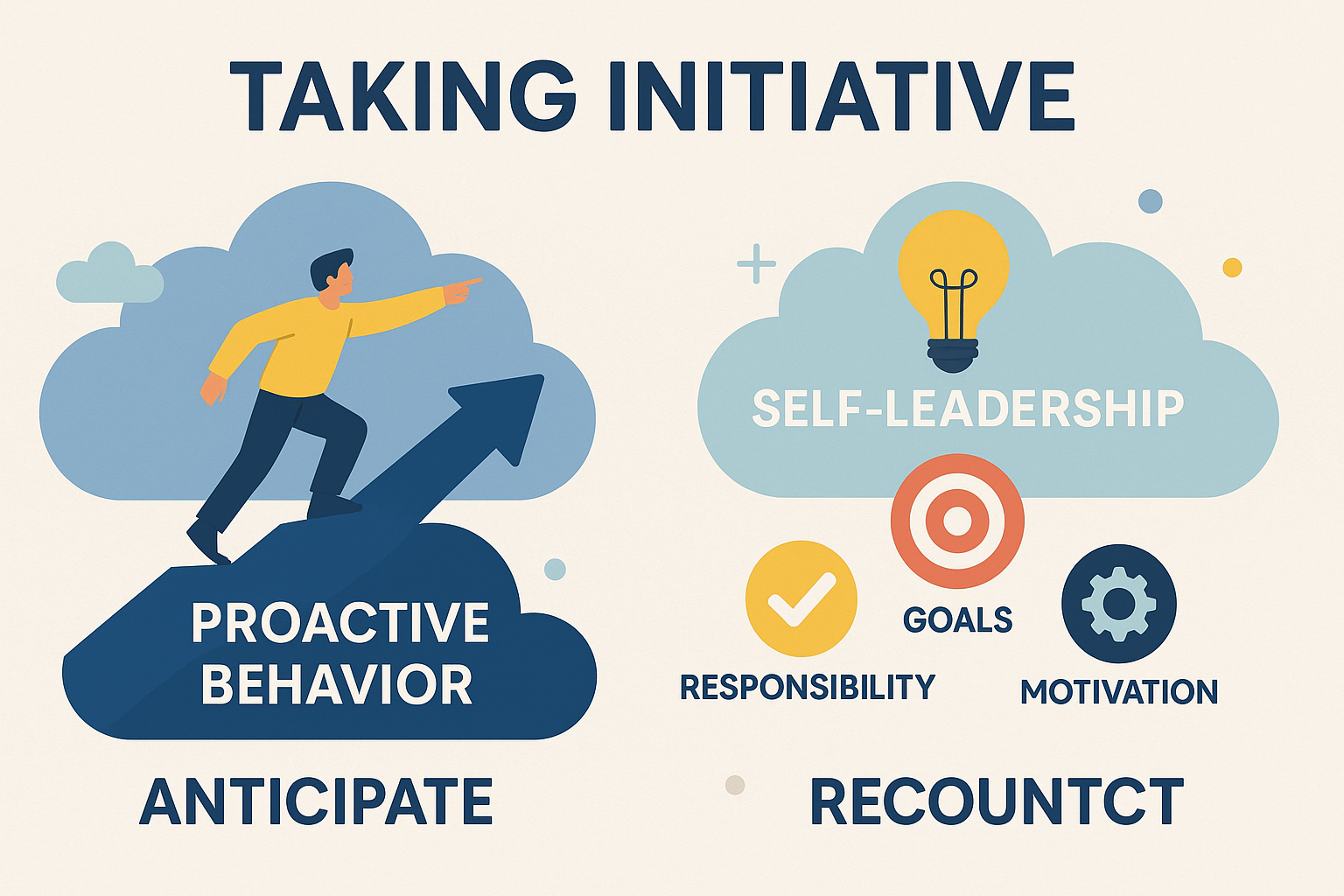
  • TAKING INITIATIVE — Learning how to move from ideas to action with confidence.
  • CREATIVITY IN ACTION — Applying both skills in projects, teamwork, and the labour market.


Key Learning Objectives

  • To understand creativity and initiative as essential skills for personal and professional growth.
  • To explore practical strategies that develop original thinking and proactive behaviour.
  • To practise applying these skills in real-life situations, from school projects to community action.
  • To connect creativity and initiative with EU labour market needs such as adaptability, problem-solving, and innovation.
Show More

What Will You Learn?

  • - FOUNDATIONS OF CREATIVITY — Understanding what creativity is and how it shapes problem-solving.
  • - TAKING INITIATIVE — Learning how to move from ideas to action with confidence.
  • - CREATIVITY IN ACTION — Applying both skills in projects, teamwork, and the labour market.

Course Content

PART 1
Creativity is often described as thinking outside the box, but it is more than a slogan. It is the ability to see possibilities where others see obstacles, to combine old ideas in new ways, and to bring imagination into everyday life. It can appear in art, science, problem-solving, or even in how you approach routine tasks. For young people, it is a foundation skill because it builds adaptability, resilience, and the confidence to experiment. One useful way to understand creativity is through divergent thinking. This means generating many possible answers instead of searching for a single correct one. It relies on fluency, flexibility, originality, and elaboration. Another perspective comes from Wallas, who described the creative process as four stages: preparation, incubation, illumination, and verification. These models show that creativity is both a habit and a cycle—it can be trained, nurtured, and repeated. In today’s Europe, where the labour market values innovation and problem-solving, creativity is not a luxury. It is a practical skill that can help any young person, regardless of background, find opportunities and create change. In this part of the module we explore what creativity really means, why it matters, and how to begin developing it step by step.

  • PART 1. CREATIVITY – Theory
  • PART 1. CREATIVITY – Action

PART 2
Creativity begins with a mindset. Instead of looking for one correct answer, the creative thinker looks for many possibilities. Divergent thinking is the ability to generate options, and it rests on four elements. Fluency is about producing a large number of ideas, without judging them too early. Flexibility means exploring different categories or approaches to the same problem. Originality is the willingness to put forward ideas that are unusual, surprising, or unique. Elaboration is the habit of expanding and adding detail, so that a vague idea becomes more concrete and practical. Together, these elements train the brain to move beyond repetition and habit. The creative process shows how ideas emerge and take shape over time. In the preparation stage, we gather knowledge and materials. In incubation, we step back and allow the mind to make connections subconsciously. Illumination is the spark of insight—the “aha” moment when an idea comes together. Verification is the stage of testing, refining, and applying the idea. This model makes it clear that creativity is not only about sudden inspiration but also about discipline and reflection. Visualising these processes helps. Imagine a circle representing the creative cycle, with each stage feeding into the next. Or picture a branching tree to represent divergent thinking, with roots spreading into different directions. These images remind us that creativity is dynamic and ongoing. There are countless real-life contexts where these models apply. A young person planning a school project can brainstorm many ways to present it, choose an unusual approach, and then test whether it works. A community group working on sustainability can prepare with research, let ideas incubate, and then test small actions in their neighbourhood. Start-ups often rely on divergent thinking sessions to generate new business models, before refining them through the creative process. For creativity to flourish, several enabling factors are important. First is openness: a willingness to entertain unusual ideas without fear of being wrong. Second is diversity: bringing together people with different backgrounds and experiences creates a richer pool of perspectives. Third is a supportive environment: mistakes must be seen as opportunities for learning rather than failures. When these conditions are present, creativity grows stronger and becomes a reliable tool for learning, problem-solving, and innovation.

PART 3
Creativity is not an accident, and it is not reserved for a select few. It is a skill that can be developed with practice, reflection, and the right conditions. Divergent thinking shows us that creativity comes from generating many ideas, exploring multiple perspectives, and adding depth to make them real. The creative process reminds us that ideas move through stages: preparing, letting them incubate, experiencing the moment of illumination, and then testing them in practice. The key learning points from this block are that creativity is both structured and flexible. It involves deliberate effort to collect knowledge and explore options, but it also requires space and time for connections to form. It thrives in environments where diversity is valued and mistakes are accepted as part of the journey. These insights are directly relevant to young people preparing for studies, volunteering, or work in a European context where adaptability and innovation are essential. By understanding creativity at its foundation, learners can begin to practise it in daily life. This might mean brainstorming multiple solutions instead of choosing the first one, trying out an unconventional approach to a familiar task, or keeping a journal of new ideas. Each small habit strengthens the skill. As you move forward, test your understanding in the quiz that follows. In the next theory block, we will build on these foundations by exploring initiative—how to take creative ideas and act on them with confidence.

Student Ratings & Reviews

No Review Yet
No Review Yet
Gérer le consentement aux cookies

Afin d'offrir la meilleure expérience possible, nous utilisons des technologies telles que les cookies pour stocker et/ou accéder aux informations des appareils. Le fait de ne pas consentir ou de retirer son consentement peut avoir un effet négatif sur certaines caractéristiques et fonctions.

View more
Cookies settings
Accepter
Refuser
Confidentialité et cookies
Privacy & Cookies policy
Cookie name Active
Save settings
Cookies settings